By David Beaumont (regarding an article by Robbin Laird)
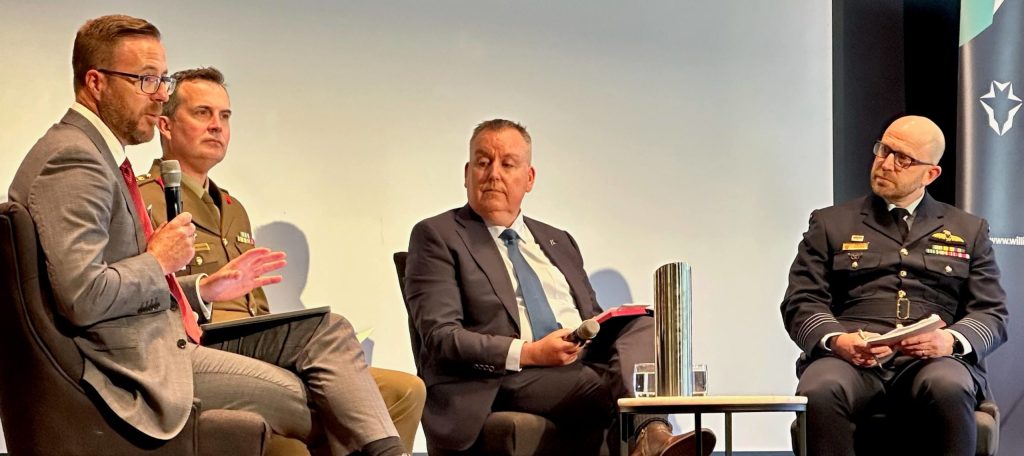
Recently the members of the Williams Foundation convened for a seminar on the topic ‘Fight Tonight: combat readiness at the speed of Relevance‘. The seminar gave members, and a large audience, an opportunity to challenge contemporary conceptions regarding military preparedness – as well as consider the challenging strategic environment that Australia, and other nations, now face.
I had the opportunity to speak in a panel. During this panel, contended that the idea of the ‘fight tonight’ could prove a conceptual trap, leading militaries to focus on delivering capability through acquisition rather than capability that is sustainable in a conflict. In discussing military sustainability, it is impossible to stray far from the important link between military performance and the capability and capacity of the nation to sustain itself in conflicts that more often than not become protracted.
In reviewing the panel session, Robbin Laird sums up the importance of military – if not national – resilience in such circumstances.
“Building genuine resilience requires acknowledging these uncomfortable truths while working systematically to address them. The panel discussion provided valuable insights into these challenges, but implementation demands sustained political will, industry commitment, and societal understanding of the stakes involved. The question remains whether Australia can learn from history and allied examples to build the resilience required for an uncertain strategic future, or whether it will discover these lessons through the harsh teacher of inadequate preparation during actual conflict.”
A brief summation of my contribution to the panel is provided below. However I encourage you to visit Robbin’s article for a full rundown of a really interesting session. From Robbin Laird at Defense.info:
“The National Support Imperative –
Colonel Dave Beaumont’s presentation outlined the scope of this challenge through Defence’s emerging National Support concept. Drawing on historical precedent, he referenced historian Cathal Nolan’s observation that modern military success requires winning “the campaign, then the year, then the decade.” Military organizations excel at tactical focus but struggle with longer-term perspectives, particularly the post-conflict stabilization and economic transformation that ensures lasting peace.
Beaumont identified four pillars of Australia’s national support base: industry, workforce, social resources and cohesion, and institutional decision-making capability and capacity.
Each pillar faces distinct challenges, but the industry component presents perhaps the greatest concern. While defence industry professionals understand their sector’s challenges and collaborate on solutions, the vast majority of Australia’s economy operates without daily consideration of defence requirements. Yet these civilian industries would prove critical during extended conflict.
The challenge extends beyond traditional defence contractors to encompass telecommunications providers, transportation networks, energy suppliers, and basic manufacturing.
As Beaumont noted, “it will matter that we’re communicating what the best potential needs of conflict may be, to Qantas, to Telstra and beyond.” This represents a fundamental shift from viewing defence industry as a specialized sector to recognizing the entire national economy as a potential defence resource.
Current global events already demonstrate how civilian industries become military assets. Supply chains have been “securitized” and wielded as weapons in the current geopolitical environment. Nations must make strategic choices about suppliers and trading partners based on security considerations rather than purely economic factors.
This reality demands national readiness that extends far beyond military forces to encompass infrastructure, workforce, and material requirements across society.
The institutional component proves equally critical but often overlooked. Democratic societies require decision-making apparatus capable of rapidly prioritizing resources for war while maintaining democratic governance and social cohesion. This balancing act – preserving democratic values while mobilizing for sustained conflict – represents one of the most complex challenges facing liberal democracies in an era of great power competition.”

 The Paper War: Logistics... and everything but the fighting.
Leave a comment