By David Beaumont
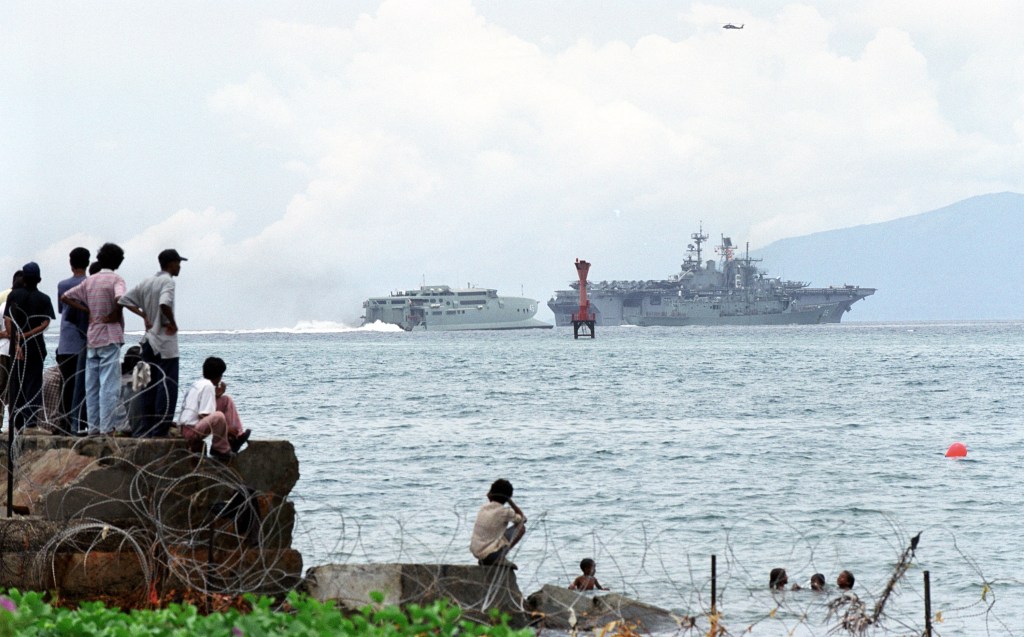
In late July 2024, I was fortunate to enough to have my research recognised with the award of a Doctor of Philosophy. My research entailed a deep study of Defence’s history to unpick the reasons that the Australian Defence Force’s leadership of a coalition of over 10000 soldiers, sailors and aviators was afflicted by logistics difficulties. A restriction of access to the research has just been lifted, and the thesis can now be downloaded here:
This website contains many articles that refer to the research – articles often written as part of a process of explorative learning, testing ideas, and choosing directions to wander (and wander I did, over nearly eight years!). The link below leads to the first article of four that abridges the research, being based upon a public presentation given at the Australian National University.
So, was the research ultimately useful?
While I am biased, I think it is fair to say that it was one part among many others that led to organisational change in Defence. Encouraged by a few academics, and even more ex-senior military officers, I drew upon lessons from the research to prepare a submission into the 2022 Defence Strategic Review. The submission – something I remain proud of despite the spelling mistakes – can be found here:
Why did the lessons matter? Well, it’s because logistics now matters (just as it always has). The role of the Nation in supporting and sustaining military operations is being scrutinised by defence establishments around the world. The reasons why should be clear to any reader of blogs such as this one. For Australia, there’s much to learn about civil preparedness, logistics and strategic policy from recent history – lessons that are entirely pertinent given the strategic challenges Australia faces today.
In closing this brief article, and hopefully to entice you further, the abstract follows:
“The historiography of the Australian Defence Force’s (ADF) performance during Operation Warden in 1999 portrays operational success as being despite severe logistics limitations. The ADF may have done better, as history and anecdote goes, had it not been victim of budgetary pressure, and commercialisation and downsizing agendas progressed over the preceding twenty years. This may be correct, but anecdotes are no replacement for detailed historical enquiry. While acknowledging that the ADF’s preparedness prior to Operation Warden declined over time, historians have not explored exactly how or why such inferior performance manifested. Twenty-five years on, we still know little about the systemic failures in the ADF’s approach to strategic logistics and the consequences this had on operations.
This thesis aims to address this gap by comprehensively examining the ADF’s approach to strategic logistics – from government policies to organisational implementation – from 1987 to operations in East Timor in September 1999. The thesis approaches history through the lens of ‘logistics preparedness’, recognising that there is a breadth of factors which, conspiring together, all but ensure a military is unprepared. In doing so, we learn how the ADF got to a point where, in 1999, a major operational failure was a real possibility. By focussing on the ADF’s approach to strategic logistics, this thesis shows that the logistics problems experienced by the ADF during Operation Warden were not only because of the uncertainty native to preparedness planning, but were an inevitability in a force, in the Defence organisation writ large, and in a Government policy-making environment that failed to give logistics matters the deference they deserved. It concludes that the so-called reforms made the ADF less, not more, strategically prepared, and logistically capable for operations in 1999.”


Leave a Reply