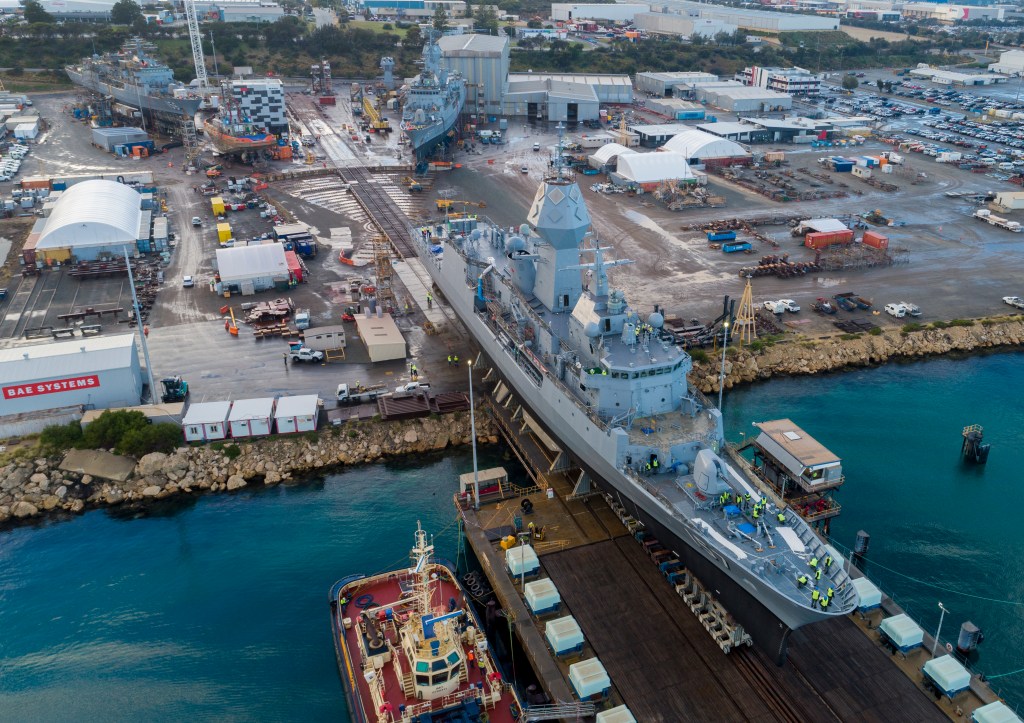
If national support is essential to National Defence and national civil preparedness, what characteristics should the system possess for it to be a credible source of strategic advantage for Australia in competition, crisis and conflict?
By David Beaumont, PhD.
In the preceding articles in this series, I have argued that national support is not a peripheral logistics concern, nor a narrow question of Defence access to international or domestic capability it does not own. Through its association with national civil preparedness, national support becomes a strategic preparedness problem of the highest order. In part one, I acknowledged that military power depends upon the nation’s resources, industrial capacity, infrastructure, workforce, commercial systems and logistics networks being organised and coordinated before crisis occurs.[1] In my second article, I examined how competition, crisis and conflict will place pressure on the national support base, exposing the limits of assumptions underpinning military and national planning as has developed a more permissive strategic era.[2] In my most recent piece, the argument was extended by considering how Defence preparedness and national civil preparedness might be connected, if not defined, through a practical approach to national support.[3] If the strategic rationale for national support is now clear, the question is one about the qualities that an effective system must possess if it is to do more than describe that Australia has a preparedness problem.
That question matters because the current polemic around national civil preparedness risks become reassuring without becoming particularly useful. Since as long as the Department of Defence and Australian Defence Force (ADF) have existed, countless officials and commentators have asserted that Defence, government, industry and the community must work together. Agendas have been formed, comprehensive strategic reviews undertaken, and pronouncements made to this effect. But as I have shown in my own research, Australia has always grappled with defining the arrangements, disciplines and habits of mind that would allow national support to work under pressure.[4] A national support system that is only invoked in speeches, strategic reviews or policy statements, or in plans that are only turned to at the last safe minute, will not generate military power when civil authorities are managing simultaneous pressures during a conflict-induced polycrisis. The test is not whether the nation – or Defence to be told – accepts, in principle, that civil capacity is intrinsic to military performance. Instead, the test is whether that dependence is understood, prioritised, rehearsed and governed before a crisis forces decisions to be made at speed.
This article provides nine practical design characteristics for an effective national support system rather than an abstract theory about what might work and when. Each characteristic can be viewed as a requirement of a national support system or approach that must be effective in connecting military capability and preparedness with underpinning national capabilities and capacities. The cardinal characteristic of an effective system is that the system must be designed for assured access to resources that are entirely external to Defence. These are often commercially owned, state-regulated, internationally sourced or could be already committed to civil purposes during peace and war. The system must offer mechanisms for prioritisation when scarcity creates competition between Defence and essential civil needs. It must build resilience and redundancy into those parts of the national support base that are too important to fail. It must be adaptive enough to shift outputs, routes, labour and industrial effort as the character of demand changes through competition, crisis and conflict.
Just as importantly, national support must be integrated into Defence planning rather than appended to it after capability decisions regarding the future force, as aspired to in Australia’s National Defence Strategy, have already been made. It must balance self-reliance with the realities of interdependence, treating domestic capacity, trusted international supply and coalition arrangements as parts of the same support problem. In this sense, national support is not simply about having more stores, more effective contracts or more coordination committees. It is about creating a system in which Defence demand and national capacity can be understood, aligned and acted upon before strategic circumstances outpace the collective capacity to respond meaningfully at all.
The purpose of this article, then, is to move from the reasoning around a need for a national support system to its real-world character and application. This article does not propose a final model, nor does it suggest that any single framework can eliminate the uncertainty inherent in national defence planning. Rather, it identifies the attributes of a system that should guide Defence, government and national partners as they develop arrangements capable of supporting Australia in a more contested and far less forgiving strategic environment.[5]
Assured Access
Assured access is, above all else, the real point of a national support system. Resources that exist but cannot be reliably called upon in crisis are not a basis for strategic confidence. As I argued in the context of industrial capacity, access must be treated as a practical preparedness problem rather than as something we assume is available by virtue of an investment in capability, national wealth, or some other trait or condition.[6] For the end user – Defence – this means more than knowing where capability resides. It requires commercial, legal, policy and regulatory arrangements that enable Defence and government to gain timely access to national industry, infrastructure, workforce and critical materiel when circumstances demand it. It includes contingency contracting, priority access arrangements, interoperability planning, legal authorities, coordination mechanisms and, where relevant, international agreements that ensure critical support can be mobilised at speed. These issues should be faced now for, as Mark Ablong highlights, many of the legal and operational frameworks for harnessing national support are either ‘outdated, insufficiently detailed or politically untested.’[7]
Access is especially important because much of the relevant capability Defence will inevitably require will be commercially owned, dual-use or subject to a variety of different jurisdiction. A port that supports trade may become a strategic node for military logistics. A fuel distribution network optimised for civilian demand may need to support Defence mobilisation and coalition activity. Critical materiel developed for industrial application may have a dual-use within the military supply system. A civilian hospital system may need to support specialist military requirements …. the list goes on. In all of these cases, access cannot be assumed, and even if access is given, such access will normally be contingent on a balance between military and civilian needs. Accordingly, assured access must be prepared for. A credible national support system therefore requires Defence to move beyond broad engagement and towards clear, pre-agreed arrangements that reduce friction, uncertainty and delay in crisis.
Effective Prioritisation
Strategic crisis invariably produces scarcity. Fuel, freight capacity, specialist labour, engineering plant, energy, medical supplies, telecommunications and fiscal resources may all be contested simultaneously. In Part Three of this series, describing national support as the link between Defence and national civil preparedness, I emphasise that strategic crises may require government to balance military requirements against broader national demands, including civil defence, national resilience, economic management and social welfare.[8] A credible national support system is only so because it includes a coherent prioritisation mechanism, capable of identifying what is genuinely mission critical, what can be deferred, what can be substituted, and where the greatest strategic risks lie. This enables whole-of-government decision-making that is both realistic and strategically informed.
Effective prioritisation decisions depend upon quality information. This means that Defence must be able to articulate its demand signal, just as its national civil preparedness partners communicate their own. This ultimately helps government distinguish between essential demands and desirable ones, or whether to prioritise effort in one direction or the other. It must understand not only what it wants, but what the nation can plausibly provide under stress. As has been shown in mobilisations not only in Australia, but around the world, resources will always need to be directed to the preservation of social functioning, public order or continuity of government – irrespective of the nation of the threat. A mature national support system is therefore not one that assumes Defence primacy in every contest for national resources. It is one that enables the strategic balancing of military and civil priorities without critical compromises to either.
Resilience and Selective Redundancy
The third characteristic is resilience, and with it, selective redundancy. Australia’s efficiency-oriented economy has yielded benefits over years of greater openness, but this has come at the expense of (admittedly costly) industrial capability and surge capacity. Just-in-time supply chains, globalised production sources and highly optimised logistics systems are being controlled – if not weaponised – by nations seeking to coerce, disrupt and influence.[9] While a response to these issues cannot be left to a national support system to resolve in isolation, such as system may be a way in which resilience can be reintroduced in selective and purposeful ways. This includes stockholdings where justified, diversified sources of supply and distribution systems, infrastructure development, repair capacity and design for protection when targeted. Resilience, in this context, is the capacity not only to absorb disruption but to continue functioning and recover quickly.
Infrastructure resilience is a particularly important element of this characteristic. In an environment where secure and resilient physical and digital infrastructure interconnects the national support base and Defence’s logistics and support networks, that protection of critical infrastructure is vital important. Civilian infrastructure ‘is now a strategic target.’[10] This includes roads, rail, ports, airfields, fuel storage and distribution, power systems, water systems, telecommunications, subsea cable resilience and data centres. The purpose is not simply to protect assets from direct attack, but to ensure that national systems can continue to support Defence under conditions of cyber interference, physical targeting, and sustained stress leading to degradation.[11] In a strategic environment where grey-zone activities may target civilian infrastructure precisely because it supports Defence preparedness, resilience can be considered a core component of deterrence in addition to its links to support.
Strategic Balance Between Self-Reliance and Interdependence
A future national support system must carefully balance the desire for national self-reliance with the reality that support requires interdependence with allies and partners. The 2026 National Defence Strategy is clear that self-reliance does not mean attempting to make Australia self-sufficient in every element of capability or support.[12] Such an ambition would be unrealistic and unnecessary, as I have mentioned in earlier articles. Rather, greater self-reliance means making prudent and feasible investments to reduce critical dependencies, strengthen sovereign depth where it matters most, and diversify trusted partnerships so that any concentrated vulnerabilities are reduced. This sits comfortably with the broader national support argument, which treats domestic systems, global support networks and international arrangements as parts of the same support base that Australia’s military must draw from.
Assured access must be heart at any decision making about what Australia must do for itself, and what it has to do with others. In this sense, a future national support system might be defined by sovereign assurance in the areas most critical to Defence capability generation and sustainment— such things as fuel resilience, certain categories of industrial repair and manufacturing, logistics capacity, essential stockholdings and specialist skills—while simultaneously strengthening diverse international arrangements that reduce the risk of supply shocks and strategic dependency (such as with guided weapons, or strategic capabilities). National support should not be read as a withdrawal from interdependence, but as a disciplined approach to managing dependence on strategic terms that result in operationally favourable outcomes.
Adaptability and scalability
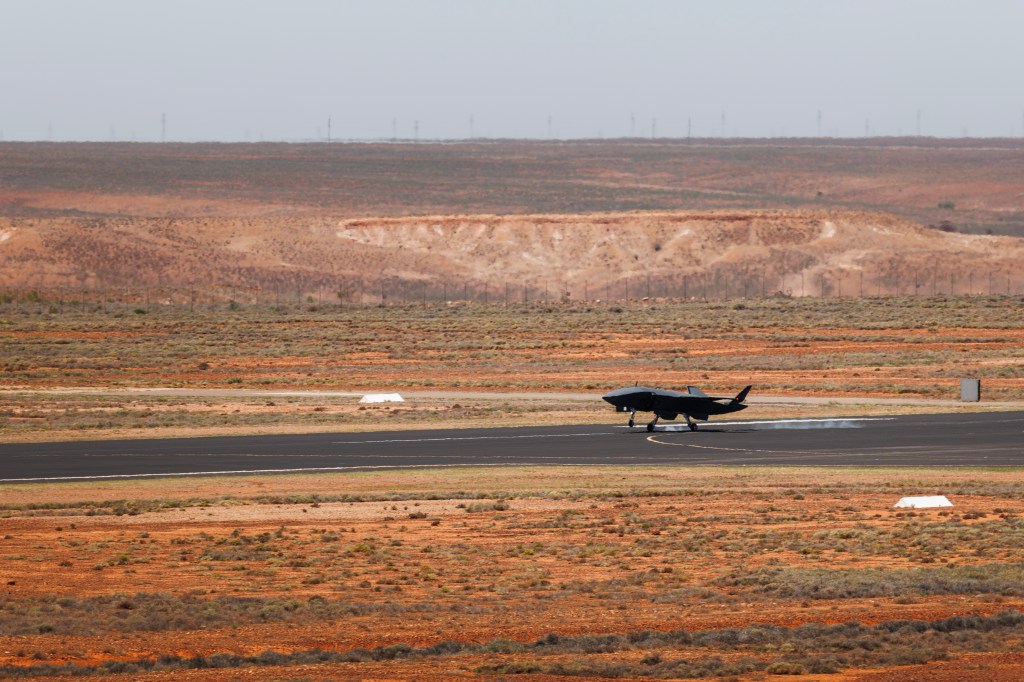
The fourth characteristic is adaptability and scalable capacity. A national support system that is only able to incrementally improve beyond its peacetime outputs will prove highly inadequate in major crisis. Contemporary conflict changes the pattern of demand as much as its scale, and wartime creates unforeseen conditions that result in radical shifts to the national support base. Repair and reconstitution may become more important than routine maintenance and long-term capability creation programs. Construction may shift from estate development to hardening, dispersal, battle-damage repairs and support to austere operating locations. Health services may require trauma surge, blood products and specialist surgical capacity. Industrial priorities may shift rapidly in response to battle damage, munitions consumption or global supply-chains collapsing. The national support system that Australia needs is therefore not only about scale; it is also about the ability of well-prepared civil systems to adapt, pivot and reorient outputs to meet Defence and new civil needs in crisis and conflict.
Contemporary lessons from Ukraine reinforce this requirement. Wartime adaptation has been one of the defining features of the strategic defence: highly dispersed manufacturing, rapid innovation cycles to battle-ready new capabilities, adaption of commercial technology to military use, and the capacity of industry to respond quickly to changing operational demands.[13] For Australia, adaptability means ensuring that the national support base is not only positioned for high-capacity self-reliance through policies such as ‘Future Made in Australia’ or direct investments (such as through ‘growth facilities’) in the ‘sovereign defence industrial base’, but is flexible enough to create options for access to industrial capability.[14] It means identifying dual-use capabilities, supporting advanced manufacturing where strategically relevant, developing industrial conversion pathways to support mobilisation, and treating services, logistics and digital support as part of the mobilisation base rather than as background conditions or planning constraints. As previous articles in this series show, there are many nations with well-developed national preparedness policies from which Australia can learn from.
It is important to call out workforce at this point. Workforce often becomes the hidden constraint in strategic preparedness, and most certainly in the scalability of a defence force expanding to meet a particular scenario. Complex military and industrial systems require specialist technicians, engineers, logisticians, cyber professionals, medical staff, tradespeople, operators and managers. These skills are largely generated through national education, training and labour markets that are already operating at peak capacity. In crisis, Defence will compete for them with civil sectors essential for society to function including hospitals, critical infrastructure operators, transport providers, emergency services and industry more broadly. This means a national support system that connects defence and civil preparedness must have a nationally-oriented view of skills, labour requirements, education and training approaches, and workforce mobility.
Integration with Defence Policy and Planning
While it may seem self-evident, it is critical that the design of a national support system must be consistent with the needs established through Defence planning. National support cannot be treated as an afterthought; if it is, low-quality assumptions about the national support base may permeate through successive levels of planning, metastasising into areas of considerable risk to the sustainment of the operational force. However, national support considerations should not just be confined to military plans. They should also be embedded earlier in policy; effective deterrence, if not operational responses, depends upon the alignment of industrial policy, mobilisation and deterrence planning.[15] Decisions about force posture, stockholdings, infrastructure, acquisition pathways, workforce design and logistics networks all have national support implications. A credible national support system is one in which these implications are visible and actively managed, and where policy and plans work together to heighten awareness and shape the incorporation of ‘depth and resilience’ into a national support approach.[16]
But the success of national support will ultimately be measured not just through analysis, or agreement over concepts, but by its successful – or not – implementation. In contemporary terms, that means access arrangements, prioritisation mechanisms, mobilisation plans and resilience initiatives must be reflected in approaches and agendas, tested in exercises, and constant part of a broader policy-cycle that accommodates changes to risks. But a national support system that exists only in policy language, or in corporate-style assurance programs, is likely to be found wanting when Defence preparedness faces operational contingencies. The practical test is whether Defence and its partners can act together with speed, clarity and confidence when warning time is short and demands escalate to the point that adaption is required.
Testing and rehearsal
Military history is replete with examples where defence forces have been caught unawares, or nations surprised by crises or events few have predicted. As mentioned earlier in the article, adaptability can be a critical factor in any support response. Adaptability is often set in the behaviours, practices and understandings that only testings and assessments can reveal. Indeed, claims of preparedness are only as credible as the exercises, operations, rehearsals and evaluations that have exposed support systems to the friction likely to exist at the moment a crisis a occurs. If access arrangements, stockholding assumptions, infrastructure dependencies, contractor support models and command relationships have not been realistically tested, Defence and its partners cannot assume they will function under pressure. A credible national support system therefore treats testing and assessment as one of the foundations of preparedness itself.
This also implies that mobilisation must be treated as a peacetime planning function rather than a wartime improvisation. Meaningful access to national resources depends on prior rehearsal, deliberate planning and a shared understanding of roles and constraints. In contemporary terms, national support arrangements should be exercised, tested and refined with civil and commercial partners so that strategic warning does not become a race to invent mechanisms under pressure. Preparedness depends not only on resources existing, but on the nation knowing how to organise and apply them when circumstances deteriorate rapidly.
This integration also needs to extend across government. The 2026 National Defence Strategy identifies national civil preparedness, supply chain resilience, National Fuel Council work, infrastructure resilience and broader whole-of-government resilience efforts as components of National Defence. For Defence, this means national support is not solely an internal integration task. It also requires systematic engagement with the Department of the Prime Minister and Cabinet, Home Affairs, state and territory governments, industry portfolios, energy and transport agencies, health sectors, emergency management organisations and others whose decisions shape the operating environment in which Defence will mobilise and sustain force. The strength of national support lies not Defence acting independently, but in the observable quality of Defence’s integration within the larger national system – and most importantly, integration tested in the conditions that the nation may expect to be in during a crisis or conflict.
Social Legitimacy and Strategic Communication
The ninth characteristic is social legitimacy and strategic communication. National support ultimately depends on public and institutional confidence. The 2026 National Defence Strategy notes that strategic communications are essential in securing social licence for Defence activities by articulating intent, values and resolve.[17] Implied in much of my own writing about national support – indeed the reason why articles such as this one exist – is that a broader public understanding and confidence is a prerequisite for effective preparedness. But we must remind ourselves that national support is not simply a communications issue. It is a strategic one. If national support requires changed industrial priorities, redirected labour, transport prioritisation, increased coalition presence, or visible resilience measures, these actions will depend upon public understanding and confidence in the necessity and proportionality of those measures. A credible national support system requires disciplined communication, transparency where possible, and consistent engagement that strengthens trust and creates opportunities for the nation to respond resolutely in a crisis.
National benefit
Finally, an effective national support system should generate peacetime national value while preparing for crisis. Prosperity and security can be mutually reinforcing, and that investments in freight corridors, rail interoperability, skills mobility and infrastructure resilience can simultaneously improve economic performance and national support outcomes in a crisis and conflict. The 2026 National Defence Strategy similarly links prudent investment in National Defence with productivity, innovation and economic security. The most sustainable preparedness measures are often those that strengthen the nation in ordinary times as well as under stress. Fuel distribution improvements, resilient digital architecture, advanced manufacturing ecosystems, transport interoperability and stronger technical training pipelines all support growth and productivity while also contributing to defence preparedness. National support is therefore strongest when it is not framed solely as cost to society or an ‘either-or’ style argument, but as an investment in a stronger and more resilient Australian state.
Conclusion
This article has presented characteristics relevant to the creation of a national support system, but they will only ever matter if a new national support approach changes behaviour before crisis. As I have argued elsewhere in this series, Australia’s military power does not begin at the point of mobilisation, nor is it generated by Defence alone. It is produced through the virtually continuous interaction of military capability, national resources, civil systems, industry, infrastructure, workforce, and day-to-day coordination and prioritisation that allow these elements to act together when the whole national support system is pressured during crisis or conflict. A national support system that is accessible, prioritised, resilient, adaptable, integrated, strategically balanced, socially legitimate and has a national benefit in peace would therefore do more than improve logistics and support outcomes in Defence. It would strengthen the relationship between Defence preparedness and the national capacity upon which deterrence, response and recovery depend.
This also reinforces a recurring theme in my writing on logistics, industrial preparedness and the contestation of support: preparedness is not created by aspiration, policy language or institutional confidence alone. It is created by making dependencies visible, testing assumptions, building the means to prioritise scarce resources, and ensuring that Defence’s needs can be understood by those outside Defence who will be essential to meeting them. The articles preceding this one established why national support has strategic importance, why the changing character of competition, crisis and conflict is increasing its urgency, and why Defence and national civil preparedness can no longer be treated as separate problems. This article has considered the qualities such a system should possess. The next step is to consider what these qualities imply in practice.
The next two articles in this series will therefore turn from characteristics to consequences. The first will examine what national support requires of Defence as an institution, including how it frames demand, plans mobilisation, tests preparedness, engages partners and designs capability with national dependencies in mind. It will soon be followed by a second which considers the implications – as part of an increasingly important national civil preparedness agenda – of national support for government, industry, states and territories, critical infrastructure providers, commercial logistics systems and international partners. If national support is to become a real source of strategic advantage, it must be translated from rationale and characteristics into responsibilities, choices and investments. That translation will determine whether Australia’s approach to National Defence can move from strategic concept to national practice.
[1] Beaumont, D.J. ‘The Strategic Rationale for National Support, Part I: The essential role of national resources and logistics in National Defence’, The Paper War, https://logisticsinwar.com/2026/07/21/the-strategic-rationale-for-national-support-part-i-the-essential-role-of-national-resources-and-logistics-in-national-defence/ [accessed 01 Sep 26]
[2] Beaumont, D.J. ‘The Strategic Rationale for National Support, Part II: Preparing the Nation for Competition, Crisis and Conflict’, The Paper War, https://logisticsinwar.com/2026/07/28/the-strategic-rationale-for-national-support-part-ii-preparing-the-nation-for-competition-crisis-and-conflict/ [accessed 28 Aug 26]
[3] Beaumont, D.J. ‘The Strategic Rationale for National Support, Part III: National Support as the link between defence and national civil preparedness’, The Paper War, https://logisticsinwar.com/2026/08/11/the-strategic-rationale-for-national-support-part-iii-national-support-as-the-link-between-defence-and-national-civil-preparedness/ [accessed 28 Aug 26]
[4]Beaumont, D.J., Logistics, national support and the failure to prepare, Australian National University, https://openresearch-repository.anu.edu.au/server/api/core/bitstreams/4a0cae1a-f410-4576-ac2d-8f7bff044ceb/content [accessed 21 Aug 26]
[5] Beaumont, D.J., ‘From industry access to strategic advantage: why competition for industry and logistics will shape success in and out of war’ The Paper War, https://logisticsinwar.com/2026/06/26/from-industry-access-to-strategic-advantage-why-competition-for-industry-and-logistics-will-shape-success-in-and-out-of-war/ [accessed 18 Aug 26].These attributes could be applied to different countries in different circumstances.
[6] Ibid.
[7] Ablong, M., ‘National support for Defence is a whole-of-nation imperative’, The Strategist, Australian Strategic Policy Institute, 14 October 2025, https://www.aspistrategist.org.au/national-support-for-defence-is-a-whole-of-nation-imperative/ [accessed 23 Aug 26]
[8] Beaumont, D.J., ‘The Strategic Rationale for National Support, Part III: National Support as the link between defence and national civil preparedness’, op. cit.
[9] For example, see Shmavonian L, Hodges, J. and Sheffi Y., Weaponising supply chains: US-China trade and national security, MIT Supply Chain Frontiers Podcast, Ep. 37, https://ctl.mit.edu/podcasts/weaponizing-supply-chains-us-china-trade-and-national-security [accessed 16 Aug 26]
[10] Progni, L. and Leskevivius, V. ‘Civilian infrastructure is now a strategic target. NATO must adapt to protect it.’, Dispatches, Atlantic Council, 02 Jul 2026, https://www.atlanticcouncil.org/dispatches/civilian-infrastructure-is-now-a-strategic-target-nato-must-adapt-to-protect-it/, [accessed 01 Sep 26]
[11] See ‘China orders military supply chain checks in self-reliance push’, The Business Times, 31 Aug 2026, https://www.businesstimes.com.sg/international/china-orders-military-supply-chain-checks-self-reliance-push [accessed 01 Sep 26]
[12] Department of Defence, 2026 National Defence Strategy, Commonwealth of Australia
[13] Adapting under fire: Ukraine’s race to reinvent modern defense, Center for strategic and international studies, https://www.csis.org/analysis/adapting-under-fire-ukraines-race-reinvent-modern-defense [accessed 23 Aug 26]
[14] Department of Defence, Expanded support for Australian defence industry through $US3 Billion finance facility, https://www.minister.defence.gov.au/media-releases/2026-08-28/expanded-support-australian-defence-industry-through-us3-billion-finance-facility [accessed 02 Sep 26]
[15] Jensen, B., ‘Reindustrialisaton and great power competition: deterrence by capacity’, Center for strategic and international studies, USA, https://www.csis.org/analysis/reindustrialization-and-great-power-competition-deterrence-capacity [accessed 01 Sep 26]
[16] Ibid.
[17] Department of Defence, 2026 National Defence Strategy, 2026, p 30


Leave a Reply